2026-10-23 ·
Mold Remediation Service Tarzana Near the Santa Monica Mountains
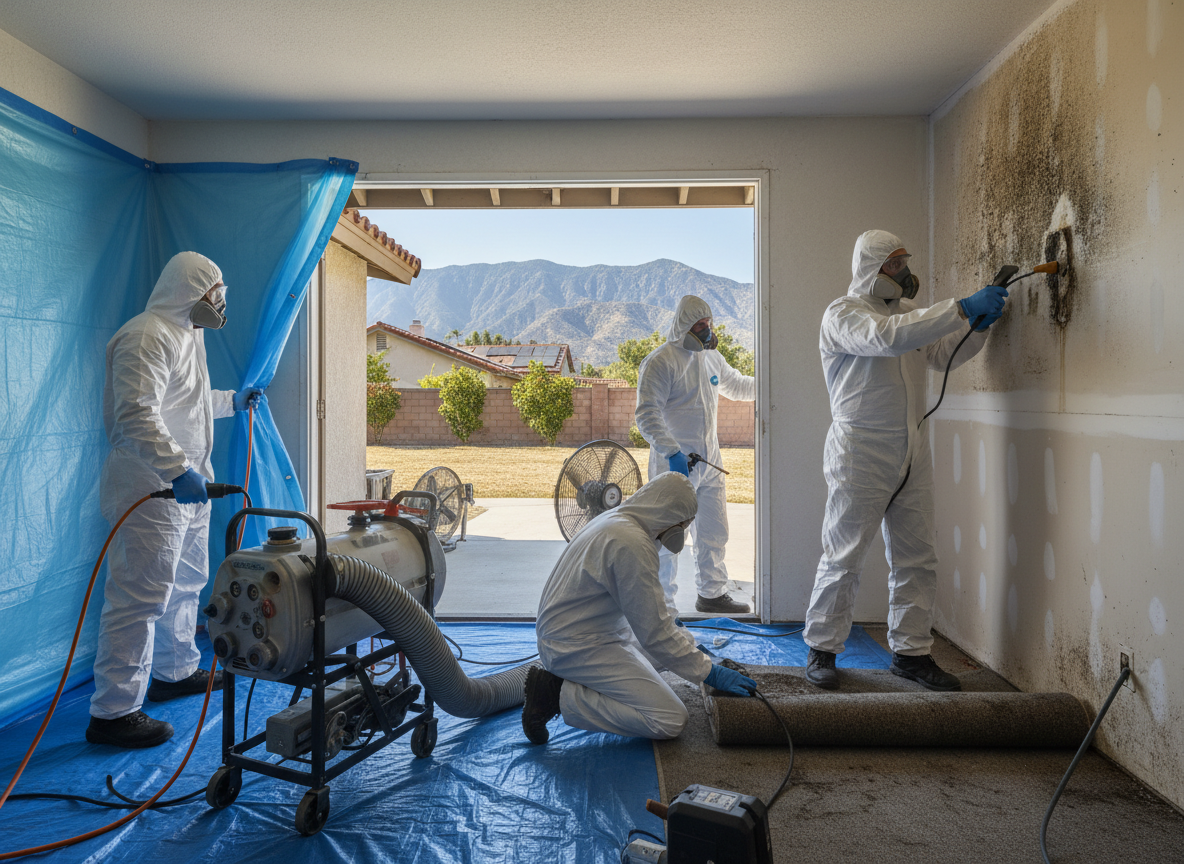
Mold remediation service Tarzana near the Santa Monica Mountains targets water intrusion from slope runoff and seasonal humidity pockets that collect around foundations in South Tarzana and Tarzana Square. The Mediterranean climate with warm dry summers leaves brief windows for drying after winter rains, so untreated moisture in crawl spaces or attics often leads to growth within weeks. Properties bordering the mountains experience faster spore spread because wind carries particles downslope into residential yards.
Terrain and Runoff Effects on Tarzana Properties
The Santa Monica Mountains create distinct drainage patterns that push water toward lots in South Tarzana during storms. Homes built on or near these slopes often have grading that channels moisture under slabs or into basements, especially around Tarzana Park where older lots meet steeper terrain. Warm dry summers accelerate surface drying while trapping dampness deeper in soil and wall cavities. This cycle repeats yearly and requires remediation crews to map hidden moisture with meters before removal begins. Crews working near Encino Tarzana Medical Center see similar patterns in single-story homes where irrigation meets natural slope flow. Addressing these sources prevents recurrence better than surface cleaning alone.
Housing Stock Challenges in Tarzana Square and Nearby Areas
Many residences in Tarzana Square and South Tarzana date from the 1960s and 1970s, featuring slab-on-grade construction and limited ventilation that traps moisture after rare heavy rains. How to Check for Hidden Mold in Tarzana Homes Built Before 1980 outlines inspection points common in these builds. Mountain proximity adds wind-driven rain exposure on north-facing walls, increasing risk in attics and wall cavities. Nearby Encino and Woodland Hills share the same housing age and terrain influences, so crews apply consistent protocols across these Los Angeles county pockets. Remediation here often involves removing affected drywall sections rather than fogging alone because older materials absorb spores deeply.
Practical Remediation Steps Near the Mountains
Technicians start by isolating affected zones with containment barriers to keep spores from migrating into living spaces. They then extract standing water and apply HEPA filtration before removing porous materials like insulation. Mold remediation near me details the containment and disposal sequence used on slope-adjacent lots. Post-removal, crews dry cavities to under 15 percent moisture content and treat remaining surfaces with antimicrobial solutions suited to Mediterranean climate conditions. Final clearance testing confirms spore levels match outdoor baselines before barriers come down. Properties in Reseda and Encino follow the same sequence when mountain runoff reaches their boundaries.
Seasonal Timing for Follow-Up in Tarzana
After winter rains, schedule checks within 48 hours of visible leaks because warm dry summers do not fully dry deeper materials. South Tarzana residents note that post-storm inspections catch growth before it spreads into HVAC systems. Summer months allow faster drying but require attention to irrigation overspray near foundations. Linking remediation with water damage mold remediation prevents repeat issues when slope drainage changes after landscaping updates.