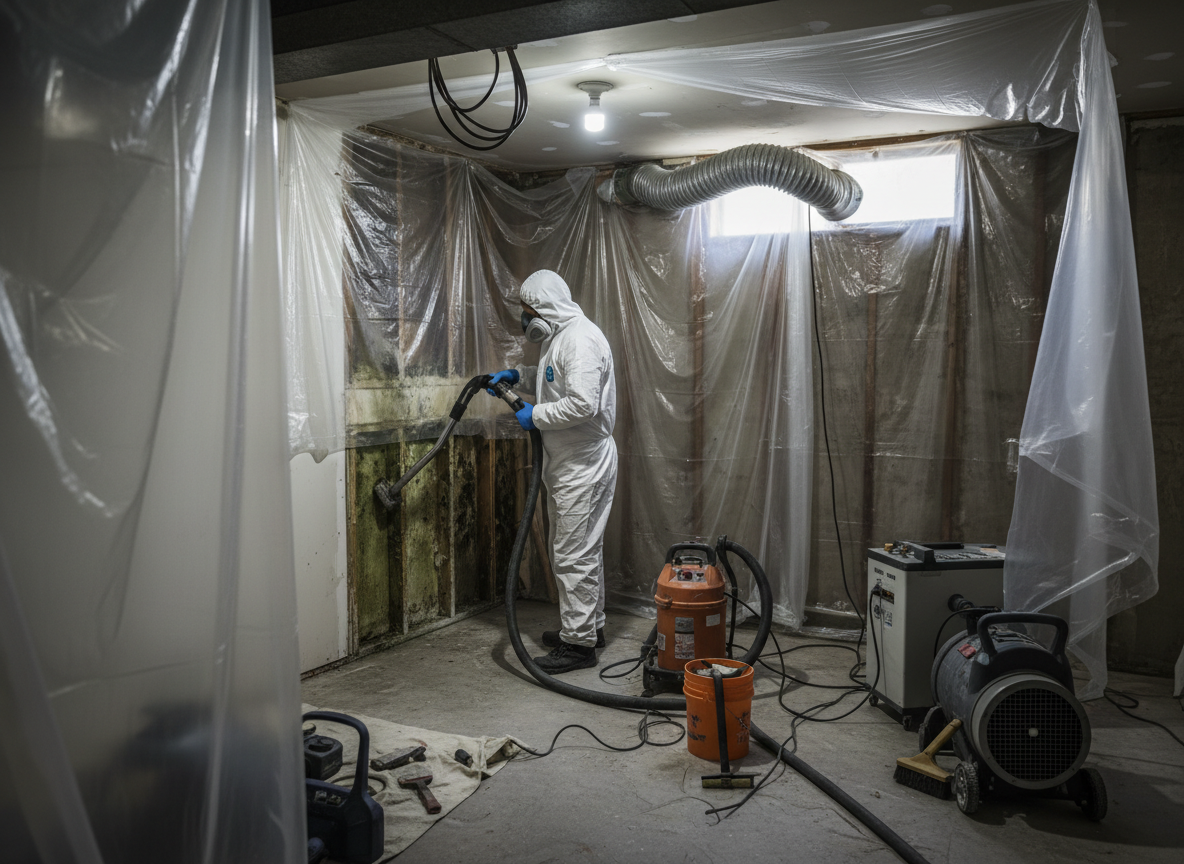
Tarzana homes built in the 1950s and 1960s often feature stucco exteriors and slab foundations that trap moisture from irrigation leaks or roof penetrations near Tarzana Park. Summer heat dries surfaces quickly while winter rains push water under slabs, allowing hidden mold growth in subfloor voids and wall cavities. Remediation requires cutting back drywall to the nearest studs, applying antimicrobial agents, and using negative air machines to prevent spores from migrating into adjacent rooms of South Tarzana properties.
Encino Tarzana Medical Center and surrounding commercial buildings share utility corridors that can introduce condensation issues into nearby residential blocks. In Reseda and Woodland Hills, older HVAC systems with poor drainage frequently seed mold in attics and crawl spaces during the dry season when homeowners close vents to save energy. Technicians must verify airflow with moisture meters and sometimes install temporary dehumidification before sealing, because simply removing visible growth without addressing the humidity source leads to rapid recurrence once temperatures rise again.
Los Angeles county code requires proper disposal of contaminated materials and documentation of clearance testing. Crews working Mold Remediation Service Tarzana jobs isolate work zones with 6-mil poly sheeting and HEPA vacuums rated for 99.97 percent particle capture. Homeowners in Tarzana Square should expect the process to disturb finishes, so planning for minor reconstruction after remediation prevents secondary water intrusion from unsealed penetrations.
Technician insight
In Tarzana the thing that catches most people out with mold remediation near me is irrigation leaks along slab edges in 60-year-old ranch homes. The dry summer months mask the problem until winter rains hit, then water travels under the slab and feeds mold in floor joists that homeowners never see until the smell reaches the living room.
Bathroom Leak Behind Shower in South Tarzana
Water from a cracked shower pan migrated under the slab of a 1962 home near Tarzana Park. Inspection revealed black mold on the underside of the subfloor extending three feet into the hallway. Crews removed the tile and drywall, dried the cavity for four days, treated the joists, and restored airflow before reinstalling finishes.
How it works
- 1
Initial Assessment
Inspect affected areas in Tarzana homes using moisture meters and thermal imaging to locate hidden growth behind walls or under slabs.
- 2
Containment Setup
Seal rooms with plastic barriers and negative air pressure to stop spores from spreading into unaffected spaces like hallways or attics.
- 3
Removal and Cleaning
Remove porous materials, treat surfaces with EPA-registered antimicrobials, and HEPA vacuum all remaining dust in South Tarzana properties.
- 4
Drying and Clearance
Run dehumidifiers until moisture levels normalize, then perform air sampling to confirm the space meets post-remediation standards.
Pricing
Cost depends on square footage affected, depth of hidden growth, and whether reconstruction is needed after removal; request an on-site assessment for an upfront quote.