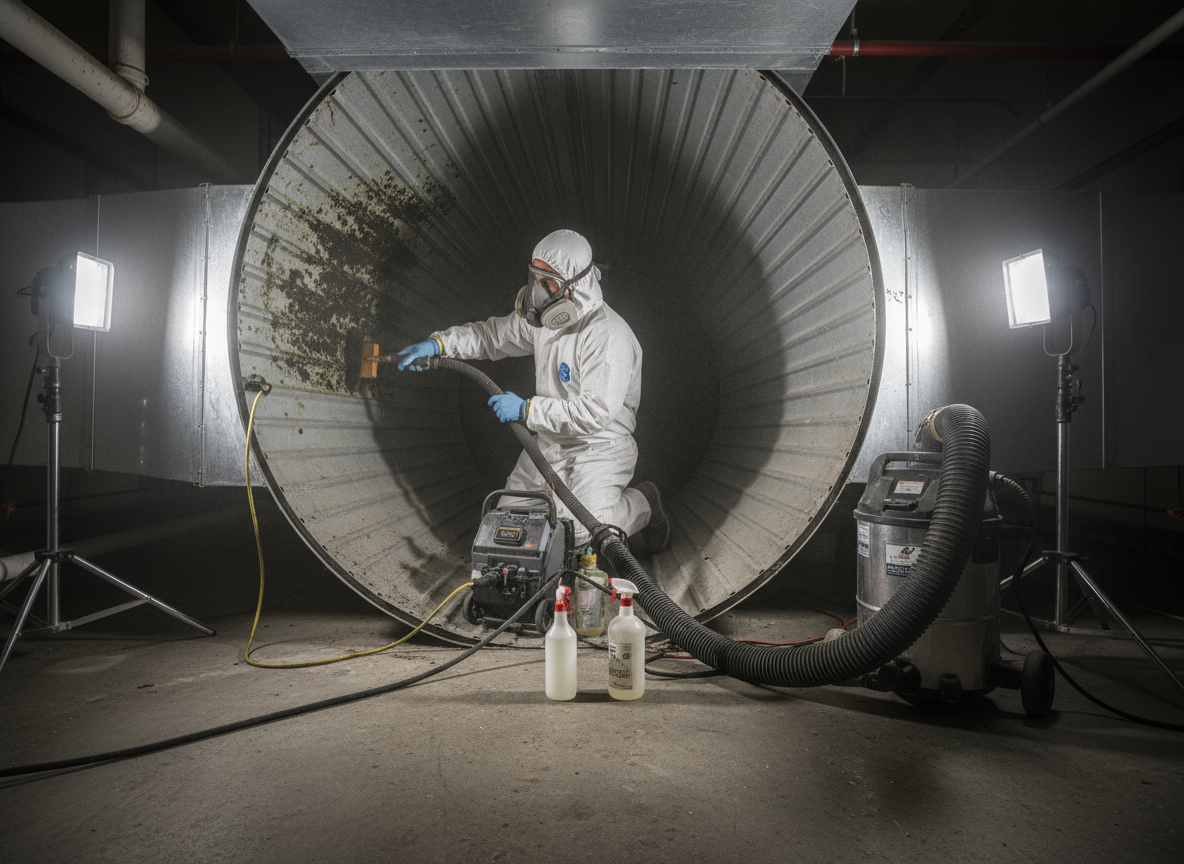
In Tarzana's Mediterranean climate with warm dry summers, air conditioning runs heavily and pushes spores through ductwork in homes built from the 1950s onward. Many properties in Tarzana Square and South Tarzana have original flex duct or fiberglass-lined systems that trap moisture from occasional winter rains or plumbing leaks, allowing mold to colonize inside the lines rather than on visible surfaces. Remediation requires isolating the HVAC, removing contaminated sections, and cleaning the plenums without disturbing asbestos tape common in Los Angeles County homes of that era.
Edge cases include partial blockages where mold sits downstream of the air handler near Encino Tarzana Medical Center neighborhoods; simply replacing filters fails to address the source. Technicians must map the full run from the unit on the roof or side yard through crawlspaces or attics, often finding growth where condensation drips onto metal elbows. Negative-air machines and HEPA filtration protect adjacent rooms while work proceeds, and post-clean verification uses borescopes rather than surface swabs alone.
Los Angeles building codes require proper containment when disturbing insulation around ducts, and improper handling can spread spores into living spaces. Homeowners in Woodland Hills and Reseda frequently discover the issue only after musty odors return each time the system cycles on. Full remediation includes sealing joints with mastic instead of tape and advising on filter upgrades suited to the dry summer dust load that carries additional particulates into the vents.
Technician insight
In Tarzana the thing that catches most people out with ventilation mold remediation is how the dry summer AC use hides moisture until a winter leak or heavy dew point spike lets mold bloom inside the flex duct runs common in 1960s homes near Tarzana Park.
South Tarzana Home with Recurring Odor
A homeowner in South Tarzana reported musty smells only when the AC ran. Inspection found mold lining the return duct near the crawlspace entry. We isolated the system, removed the contaminated flex sections, cleaned the plenum, and sealed the joints. The odor disappeared and follow-up checks showed no regrowth.
How it works
- 1
Initial Containment and Inspection
Set up negative air at the return and supply points, then use borescopes to map mold locations inside the duct runs serving the Tarzana property.
- 2
Source Removal
Cut out and bag contaminated flex duct or liner sections, treating any remaining surfaces with EPA-registered antimicrobials approved for HVAC use.
- 3
System Cleaning and Sealing
HEPA vacuum the plenums and coils, then seal joints with mastic to prevent future moisture entry common during winter rains.
- 4
Verification and Restart
Run post-clean air sampling and visual checks before restoring normal HVAC operation and advising on filter changes.
Pricing
Cost depends on the length and accessibility of affected duct runs plus whether the air handler itself requires cleaning.