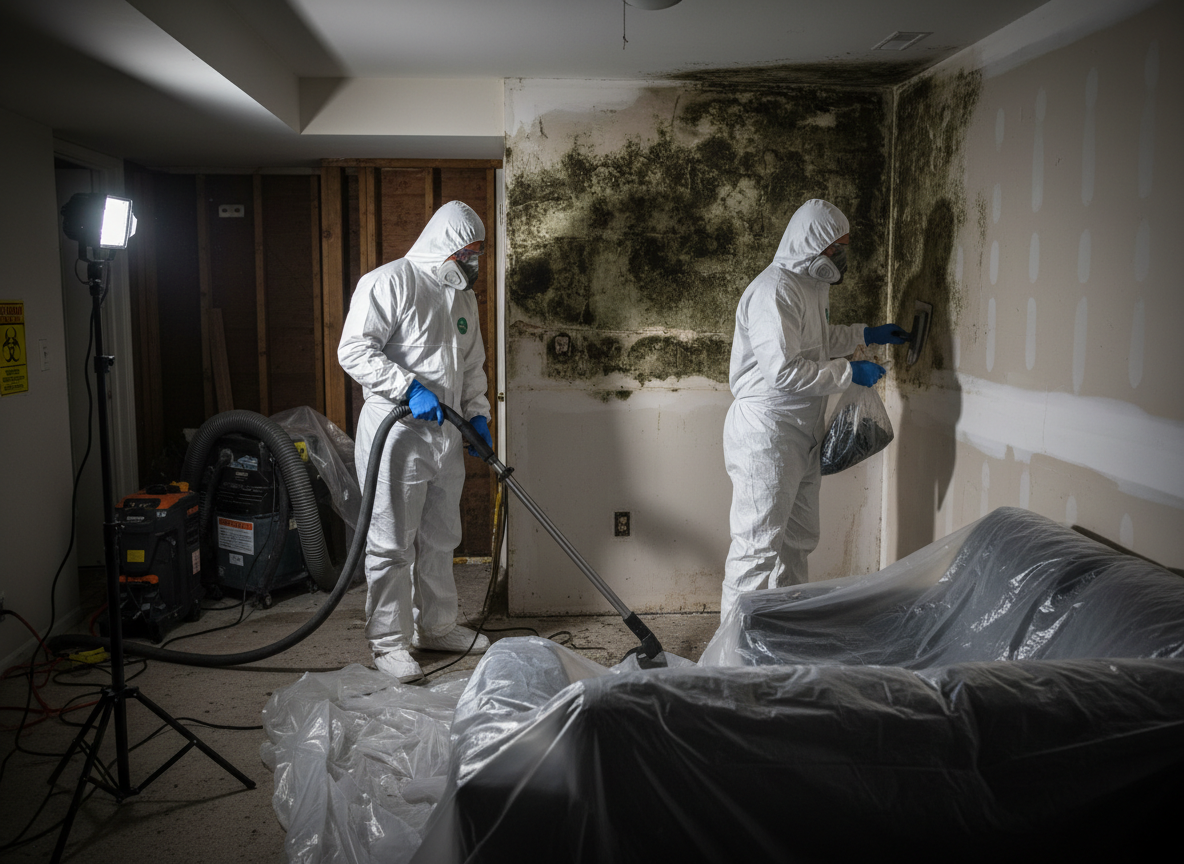
Tarzana homes built in the 1950s and 1960s around Tarzana Square and South Tarzana often use stucco over wood framing with single-layer drywall. When roof or plumbing leaks occur, moisture stays trapped behind these materials for months before visible signs appear on the surface. Summer heat dries the exterior quickly, but interior pockets stay damp enough for Stachybotrys and other toxic species to colonize. Remediation requires cutting back to sound material, negative air containment, and HEPA air scrubbing rather than surface sprays that leave roots behind.
Los Angeles County building codes require proper disposal of contaminated drywall and insulation as construction debris. In neighborhoods near Woodland Hills and Reseda, many properties sit on slight slopes where yard drainage directs water toward foundations during rare winter rains. This creates recurring moisture at sill plates that homeowners miss until musty odors reach living spaces. Technicians map moisture with infrared cameras and pin meters before any demolition, then seal the work area with 6-mil poly to prevent cross-contamination to adjacent rooms or HVAC systems.
After removal, source correction is required. Simply replacing a leaking pipe without addressing the wall cavity leaves conditions for regrowth. In Encino-adjacent Tarzana blocks, shared walls in duplexes mean one unit's leak can affect the neighboring property. Full clearance testing with third-party air samples confirms spore counts match outdoor baselines before any reconstruction begins.
Technician insight
In Tarzana the thing that catches most people out with toxic mold removal is how the dry summer air fools them into thinking the leak dried out on its own. A roof leak over Tarzana Park homes often wets the attic insulation in March, then everything looks fine until the next rain because the Mediterranean climate keeps exterior surfaces bone dry. By the time odors reach the bedroom below, the mold has already traveled down the studs into the living space.
Attic Leak in South Tarzana Residence
A homeowner noticed a musty smell in an upstairs bedroom after winter rain. Inspection found water had entered through a flashing failure, soaked fiberglass batts, and grown black mold down two exterior walls. Crews contained the second floor, removed the wet insulation and drywall to the studs, cleaned and dried the framing, then passed independent clearance testing before any rebuild.
How it works
- 1
Inspection and Moisture Mapping
Technicians use infrared cameras and moisture meters to locate hidden water behind walls and under floors without guessing.
- 2
Containment Setup
Negative air machines and 6-mil poly barriers isolate the work zone from the rest of the home and HVAC system.
- 3
Removal and Disposal
Contaminated drywall, insulation, and baseboards are cut out, bagged, and removed following Los Angeles County disposal rules.
- 4
Cleaning and Drying
HEPA vacuuming, antimicrobial treatment of framing, and dehumidification bring remaining surfaces to dry standard.
- 5
Clearance Testing
Independent air sampling verifies spore levels before any new materials are installed.
Pricing
Cost depends on square footage affected, depth of hidden growth, and whether structural repairs are needed after removal.