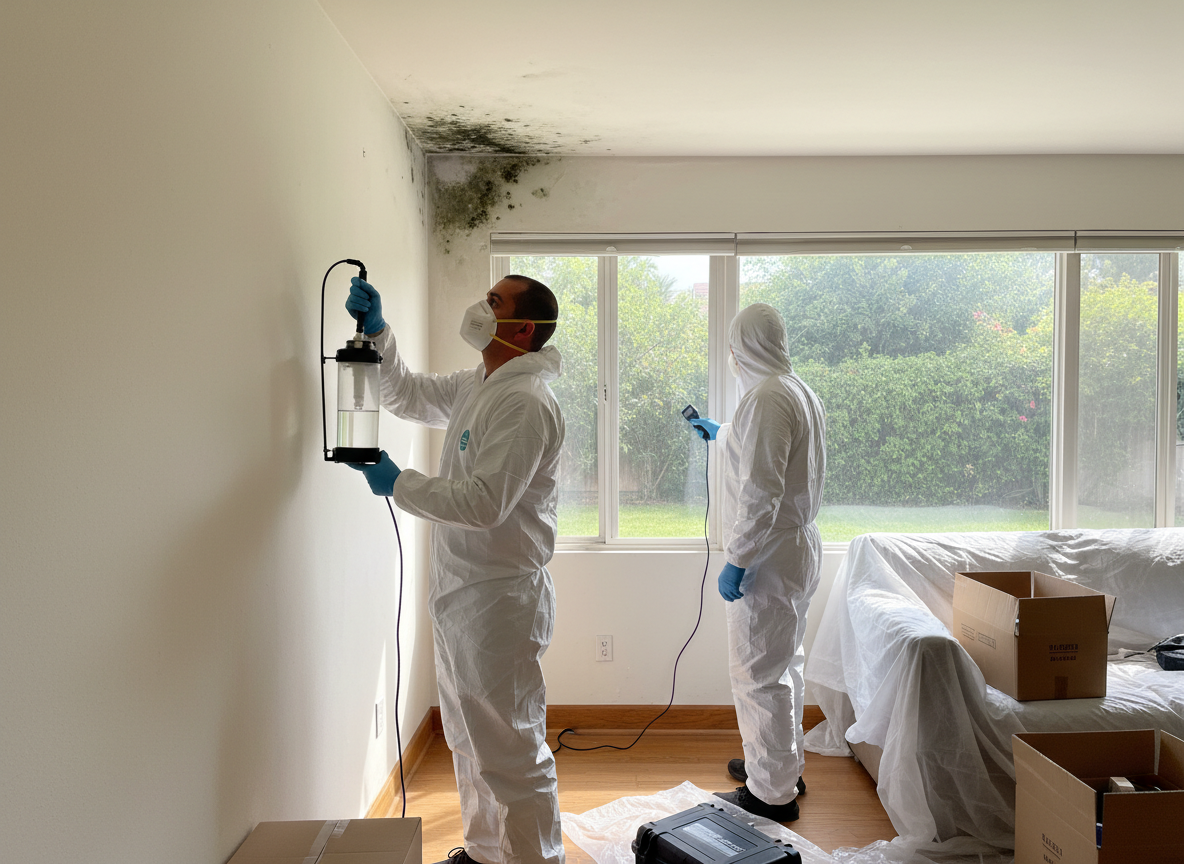
Tarzana homes built decades ago in South Tarzana often feature stucco exteriors and slab foundations that trap moisture during the occasional winter rains common to the Mediterranean climate. Warm dry summers keep surface humidity low, so mold frequently develops in hidden wall cavities or under flooring near Tarzana Park where irrigation runoff meets poor drainage. Testing crews rely on infrared cameras and pinless meters to locate these pockets without demolition, then collect air and surface samples for lab analysis that distinguishes between common outdoor spores and indoor amplification.
Properties near Encino Tarzana Medical Center sit on flatter valley terrain where high water tables after heavy rain can push moisture into crawl spaces. Residential mold testing here includes checking HVAC returns and attic insulation because the dry summer air often masks active growth until cooling systems cycle moisture back into living areas. Technicians document every reading on a floor plan so homeowners see exactly which rooms in Tarzana Square require follow-up attention rather than whole-house assumptions.
Los Angeles County building practices in the 1960s and 1970s left many Tarzana residences with single-pane windows and minimal vapor barriers. When testing these homes, crews pay special attention to bathroom exhaust fans venting into attics and to the seams around sliding glass doors that face the prevailing winds from Woodland Hills. Results come with a written map of moisture levels and spore counts, giving owners clear next steps before any remediation begins.
Technician insight
In Tarzana, the thing that catches most people out with Residential mold testing is how the warm dry summers let hidden moisture sit behind stucco in South Tarzana homes until the first winter rains arrive. Homeowners often test only the obvious bathroom and miss the slab edges near Tarzana Park where irrigation keeps the soil damp year-round.
Musty odor after irrigation leak
A Tarzana Square resident reported a persistent smell in the hallway after a sprinkler line broke. Inspection found elevated moisture along the slab edge facing South Tarzana. Air samples confirmed indoor mold growth. The report outlined targeted removal areas and ventilation fixes that resolved the issue without whole-house disruption.
How it works
- 1
Phone Consultation
Gather details about the Tarzana property, symptoms noticed, and recent water events while confirming 24/7 availability from the Reseda Blvd location.
- 2
On-Site Inspection
Walk through the home in Tarzana Square or South Tarzana using moisture meters and thermal imaging to identify suspect areas without invasive cuts.
- 3
Sample Collection
Take air and surface samples from affected zones and send them to an independent lab for species identification and concentration levels.
- 4
Report Delivery
Provide a written report with findings, moisture readings, and recommendations specific to the home's construction and local climate patterns.
Pricing
Upfront pricing after the inspection accounts for square footage, number of samples, and access conditions in Tarzana homes.