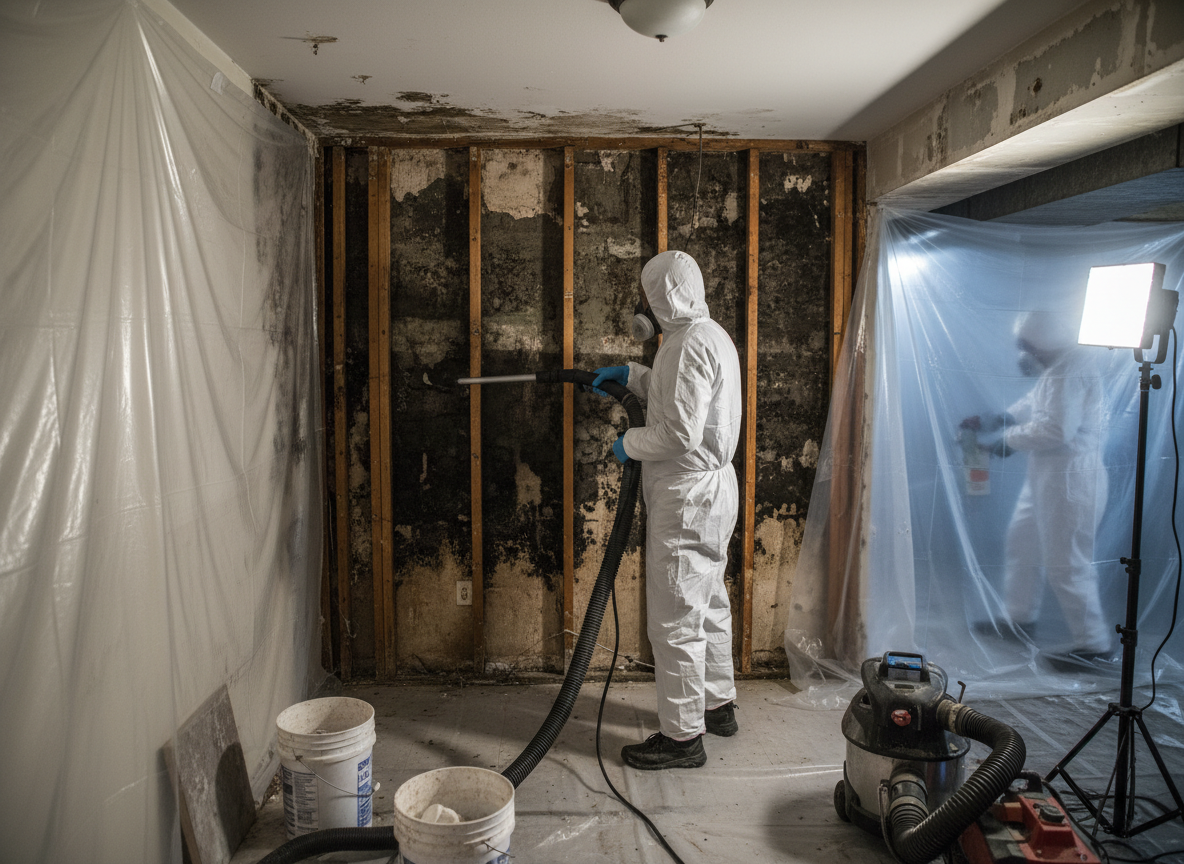
Tarzana's stucco and wood-frame homes built from the 1950s onward often develop hidden mold in attics and crawlspaces when summer air-conditioning condensation meets occasional winter rains. The dry Mediterranean climate encourages residents to run HVAC systems heavily, yet poor attic ventilation in South Tarzana properties allows moisture to linger behind insulation and drywall. Remediation crews must isolate these cavities with negative air machines and HEPA filtration to prevent spores from migrating into living areas near Tarzana Park.
Los Angeles County building codes require full containment and post-remediation verification whenever mold affects more than ten square feet, especially in multi-unit buildings around Tarzana Square. Technicians remove affected drywall and subflooring rather than simply spraying, because porous materials in older Reseda-adjacent homes retain roots that regrow after the first rain. Edge cases include mold traveling along shared walls with Encino neighbors or surfacing under luxury vinyl plank installed over damp concrete slabs in Woodland Hills properties.
Technicians carry moisture meters and infrared cameras on every call because visible growth in bathrooms frequently signals larger colonies inside wall cavities fed by leaking supply lines. In Tarzana's flat valley terrain, poor grading around 1960s ranch homes channels runoff toward foundations, creating chronic crawlspace humidity even in summer. Work stops only after independent air sampling confirms spore counts match outdoor baselines before any reconstruction begins.
Technician insight
In Tarzana, the thing that catches most people out with professional mold removal is the way 1960s ranch homes in South Tarzana trap summer AC condensation in low-slope attic spaces that never fully dry between the rare winter rains, letting colonies spread along ceiling joists before anyone notices musty smells downstairs.
Hidden Attic Mold in Tarzana Square
A homeowner in Tarzana Square noticed a musty odor after running the AC through a warm dry summer. Inspection revealed condensation pooling behind insulation along the north eaves of a 1962 ranch house. Crews contained the attic, removed saturated fiberglass and drywall, dried the joists, and cleared the space with independent sampling before reconstruction.
How it works
- 1
Initial Assessment
Technicians inspect attics, crawlspaces, and wall cavities in Tarzana homes using moisture meters and infrared imaging to map hidden growth.
- 2
Containment Setup
Plastic barriers and negative air machines isolate affected zones to keep spores from reaching unaffected rooms near Encino Tarzana Medical Center.
- 3
Removal and Cleaning
Porous materials are cut out and discarded while non-porous surfaces receive HEPA vacuuming and antimicrobial treatment.
- 4
Drying and Verification
Dehumidifiers restore normal moisture levels, followed by independent air sampling before clearance is issued.
Pricing
Pricing varies by square footage affected, access difficulty in crawlspaces or attics, and whether reconstruction is needed; every job receives an upfront written quote before work begins.