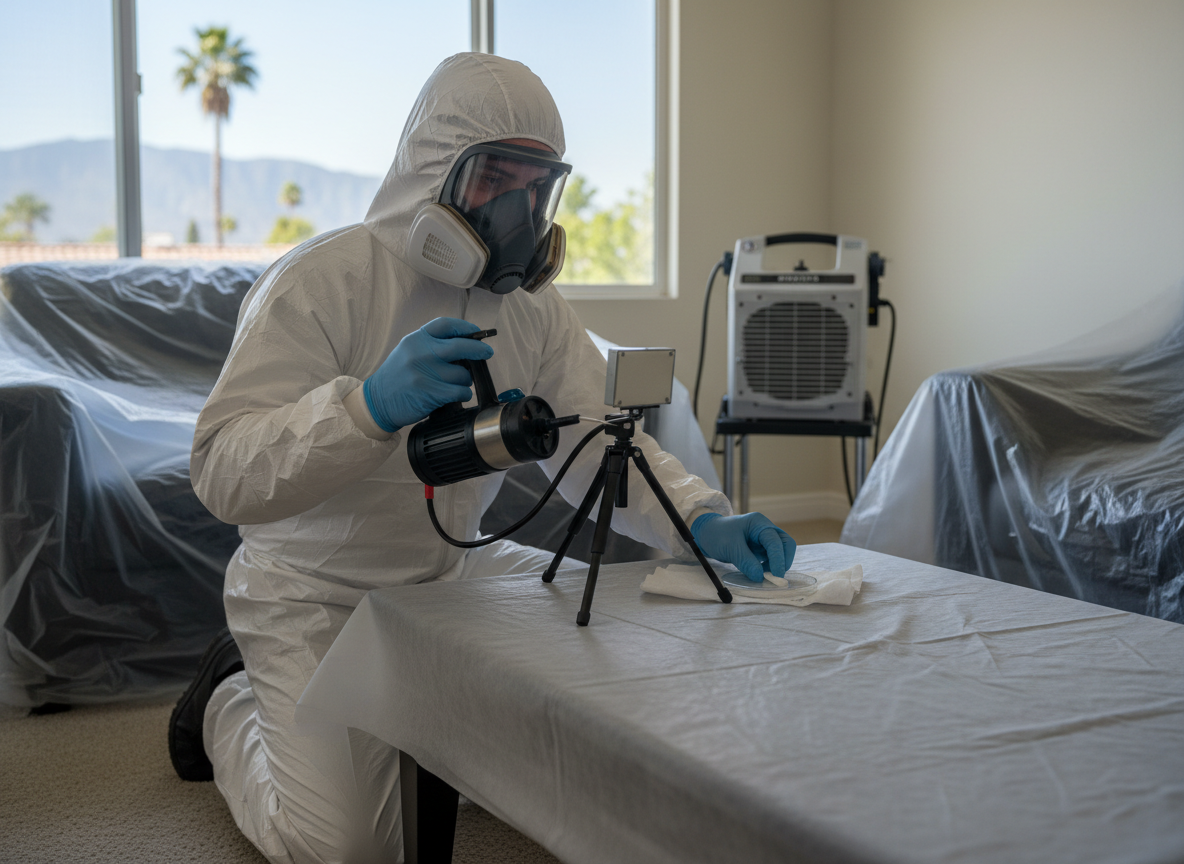
Tarzana homes built from the 1950s onward often feature stucco exteriors and slab foundations that allow moisture intrusion during the region's occasional winter rains. In neighborhoods like South Tarzana and near Tarzana Park, even small roof or window leaks can lead to hidden growth behind walls. Mold spore testing identifies the types and concentrations present before any remediation begins, which is critical in Los Angeles County where Mediterranean conditions with warm dry summers can hide ongoing moisture problems until the next wet season arrives.
Testing protocols include both air sampling with spore traps and surface tape lifts or swabs, depending on the suspected source. Properties close to Encino Tarzana Medical Center or along Reseda Boulevard frequently show elevated outdoor mold levels during Santa Ana wind events that carry spores from nearby canyons. Technicians compare indoor and outdoor counts room by room to determine whether an interior source exists, avoiding unnecessary work on homes where spores simply entered through open windows or HVAC systems.
Residents in Tarzana Square and adjacent areas of Woodland Hills and Reseda sometimes confuse dust accumulation or pet dander with mold. Proper spore testing distinguishes between these and actual fungal growth by sending samples to an accredited laboratory for genus identification. This step prevents misdirected cleaning efforts and provides documentation that can be shared with insurance carriers when claims arise from plumbing leaks or drainage issues common on the area's gently sloping lots.
Technician insight
In Tarzana, the thing that catches most people out with mold spore testing is how the dry summers let small winter leaks go unnoticed in 1960s stucco homes around South Tarzana until spores show up in HVAC returns near Tarzana Park.
Elevated Spores in South Tarzana Residence
A homeowner in South Tarzana noticed musty odors near the laundry room after recent rains. Testing revealed higher indoor spore counts than the outdoor baseline near Encino Tarzana Medical Center. Air and surface samples identified Penicillium from a slow bathroom drain leak behind the wall. Containment and targeted drying resolved the source before growth spread further into the slab foundation area.
How it works
- 1
Initial Assessment
Review property history and visible moisture indicators at the Tarzana address.
- 2
Sample Collection
Place air spore traps and collect surface samples from suspect locations.
- 3
Laboratory Analysis
Submit samples for genus-level identification and concentration reporting.
- 4
Results Review
Explain findings and next steps specific to the home's construction and location.
Pricing
Cost depends on number of samples and property size; quotes provided after initial assessment.