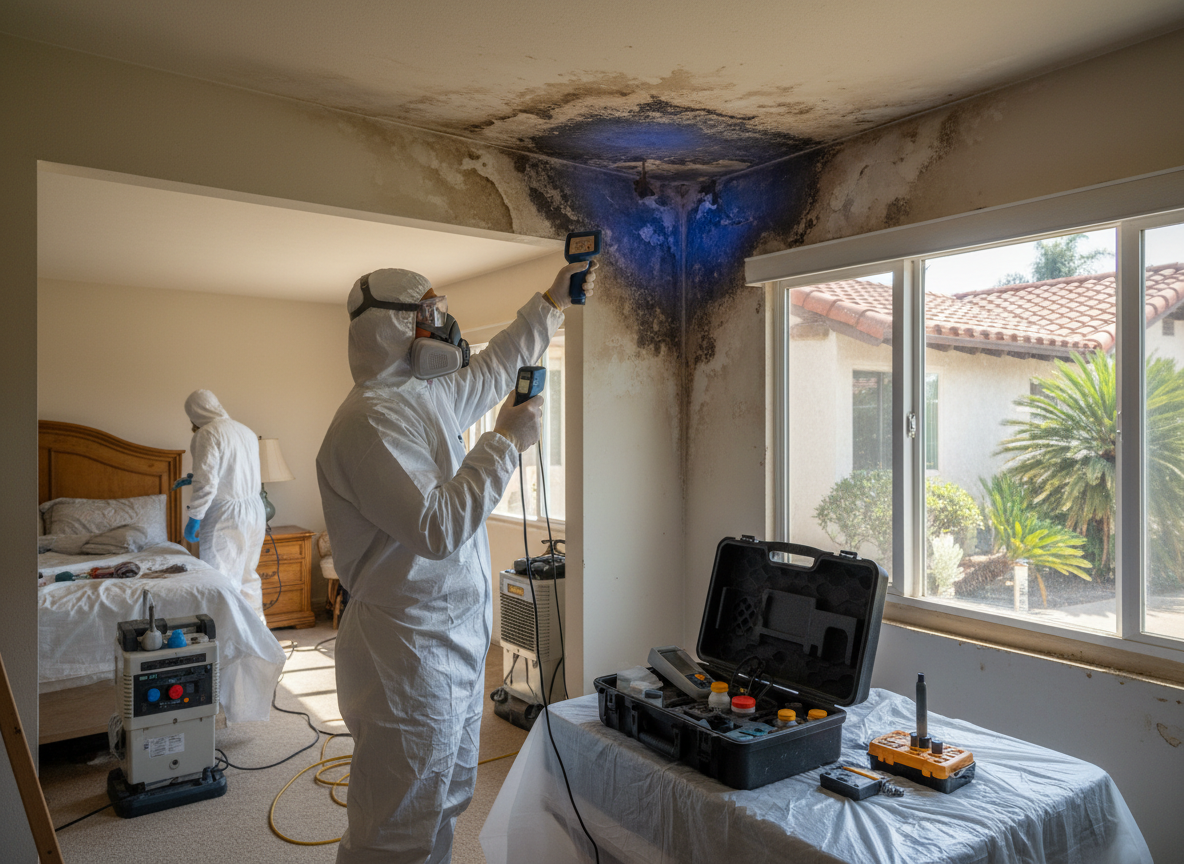
Tarzana homes built in the 1950s and 1960s often feature stucco exteriors and slab foundations that hide moisture intrusion from irrigation leaks or roof penetrations. A proper inspection starts with moisture mapping using pin and pinless meters on drywall, baseboards, and subflooring in bathrooms, laundry rooms, and kitchens. Inspectors check attic spaces for condensation where warm dry summer air meets cooler roof decking, especially in South Tarzana properties near the hills.
Mediterranean climate patterns mean most mold issues surface after winter rains rather than constant humidity. Technicians examine around windows and sliding doors common in Encino-adjacent homes where poor flashing allows water to wick into framing. Air sampling and surface swabs are collected only after visual and moisture assessment rules out obvious sources, avoiding unnecessary lab costs for residents in Tarzana Square.
Los Angeles County building practices from earlier decades frequently used paper-faced drywall in wet zones without proper vapor barriers. This creates edge cases where mold grows behind tile backer board or under vinyl flooring. Inspectors also evaluate HVAC returns and ductwork in older Woodland Hills border homes where dust and spores circulate through the system after a leak goes unnoticed for months.
Technician insight
In Tarzana the thing that catches most people out with home mold inspection is irrigation overspray hitting stucco walls on 1960s homes in Tarzana Square. The water sits behind the weep screed for years until a small bathroom leak finally triggers visible growth. Checking the exterior grade and sprinkler heads first saves homeowners from chasing interior symptoms that never resolve.
Bathroom Leak Behind Tile in South Tarzana
Homeowner noticed musty odor after heavy winter rain but no visible water. Inspection found elevated moisture in the shower wall shared with an exterior stucco surface. Moisture meter mapped the affected studs and confirmed growth behind the tile backer. Samples confirmed aspergillus. Wall was opened, affected drywall removed, and drying completed before any remediation.
How it works
- 1
Initial Walkthrough
Technician arrives at the Tarzana address and reviews any reported symptoms or past water events with the homeowner.
- 2
Moisture and Visual Survey
Full inspection of all accessible areas using meters to locate elevated moisture levels in walls, ceilings, and floors.
- 3
Sampling Where Indicated
Air or surface samples taken only from areas showing moisture or visible growth for lab analysis.
- 4
Findings Report
Written summary delivered with photos, moisture readings, and recommendations for next steps.
Pricing
Cost depends on square footage, number of stories, and whether sampling is required. Upfront quotes provided before work begins.