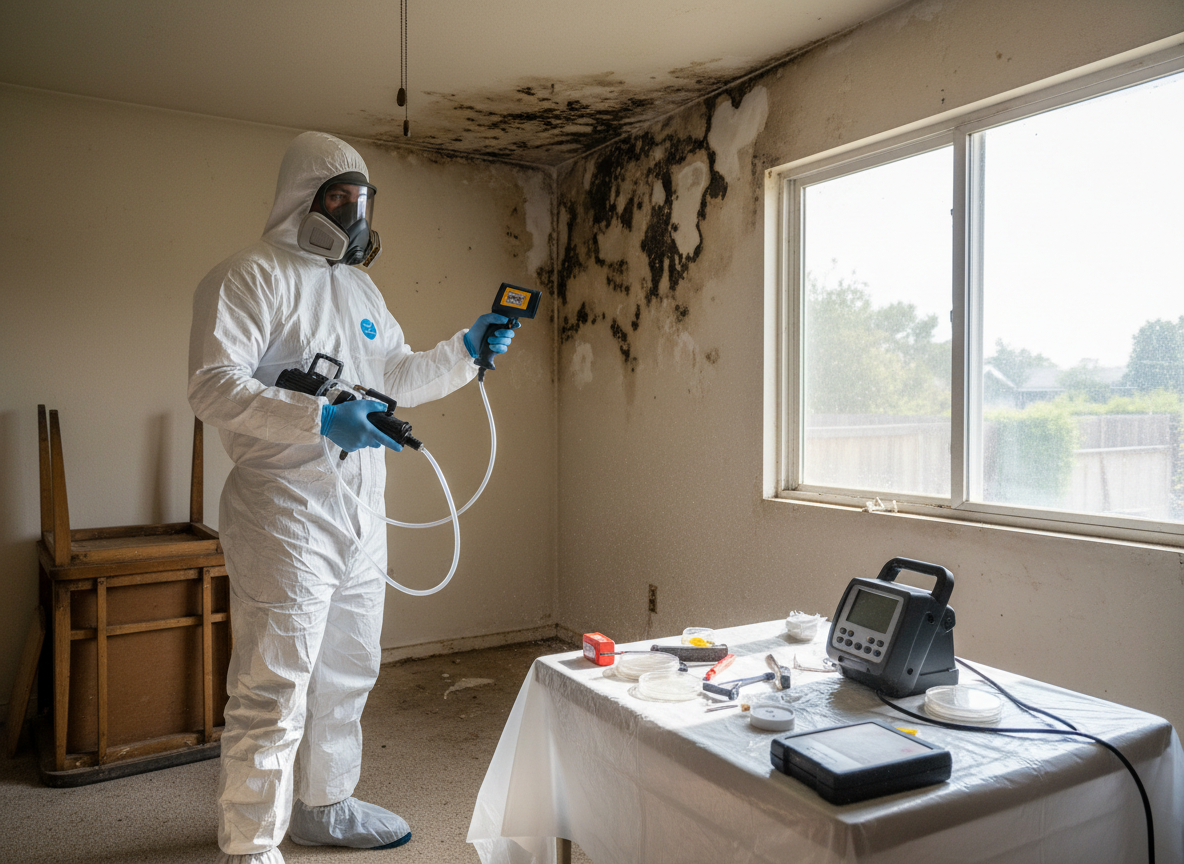
Tarzana homes built before 1970 often feature stucco exteriors and slab foundations that channel winter rain toward interior walls when gutters fail. Air sampling in these structures must target both living spaces and crawlspaces because the warm dry summers mask active growth until humidity spikes again. Technicians place spore traps at breathing height while running particle counters near HVAC returns to capture the fine fragments that travel through ductwork shared with neighbors in Tarzana Square.
Testing near Encino Tarzana Medical Center requires extra care around sensitive occupants. Residents with respiratory conditions notice symptoms faster when hidden mold sits behind bathroom tile or under kitchen sinks fed by older galvanized lines. A full assessment includes moisture mapping with infrared cameras and surface lifts from suspect areas, then lab analysis for species that thrive in Los Angeles County's occasional heavy downpours followed by rapid drying.
Woodland Hills and Reseda border properties share the same alluvial soil that retains subsurface moisture longer than the surface climate suggests. This affects how mold moves through slab cracks into finished basements. Reports detail exact colony counts and recommended clearance criteria so homeowners can compare results after any remediation work performed south of Ventura Boulevard.
Technician insight
In Tarzana the thing that catches most people out with air quality and mold testing is how the dry summer months let mold go dormant behind stucco in South Tarzana homes until the first winter rain hits the older flat roofs around Tarzana Park. Homeowners skip checking the slab edges near Reseda Blvd properties and miss the moisture that travels under the foundation from the surrounding hills.
South Tarzana Bungalow Testing
A homeowner in South Tarzana noticed musty odors after winter rains but found no visible growth. Sampling revealed elevated aspergillus levels in the living room and master closet. Infrared imaging located moisture at the slab edge near an old sewer cleanout. Targeted removal and drying cleared the readings on follow-up tests.
How it works
- 1
Initial Consultation
Discuss property age, recent leaks, and symptoms reported by occupants in Tarzana or adjacent Encino neighborhoods.
- 2
On-Site Sampling
Collect air and surface samples from multiple zones including attics, crawlspaces, and HVAC systems while documenting moisture readings.
- 3
Laboratory Analysis
Send samples to an accredited lab for species identification and concentration levels.
- 4
Detailed Report Delivery
Provide written findings with photos, lab results, and clear next-step recommendations within 48 hours.
Pricing
Cost depends on square footage, number of samples, and whether HVAC or crawlspace access is required; upfront quotes provided after site details are reviewed.